
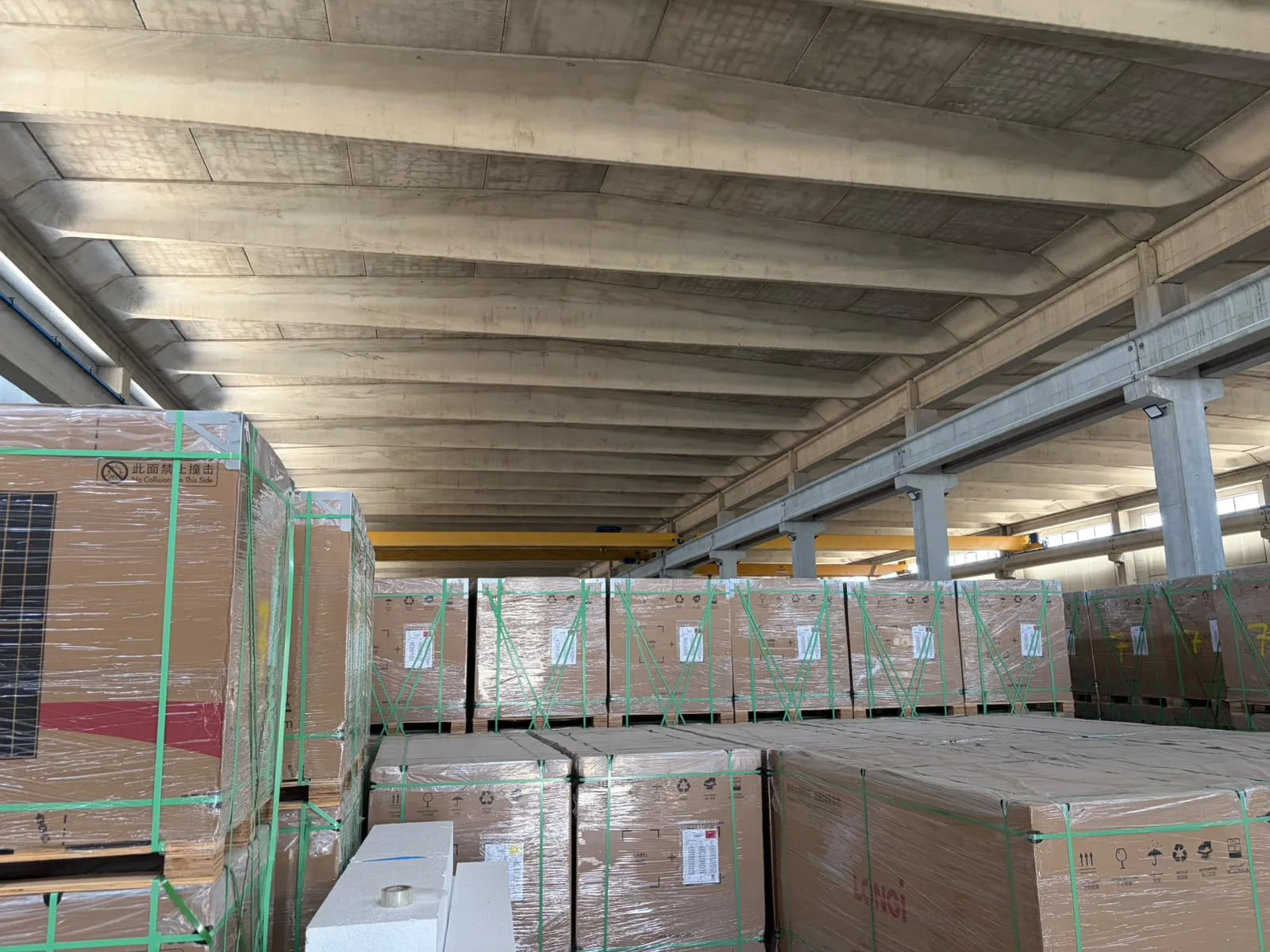
European solar procurement enters Week 42 with clearer price signals but increasingly different buying conditions by segment. Module prices moved lower across all tracked technologies in September, while demand improved only slightly and remained below the long-term average. Inverters showed no single direction: small hybrid units increased, but larger hybrid and commercial string products declined, partly because the mix of models traded changed. Storage demand continued to expand, led by utility-scale projects, while residential and C&I inventories began creating downward price pressure. For professional buyers, the practical theme is segmentation: compare exact products, delivery terms, cybersecurity, controls and long-term service rather than relying on a single market headline.
1. Solar Modules
Market direction: ↓ Falling
The latest European PV Index reported month-on-month price declines across every tracked module technology in September. Bifacial TOPCon modules averaged €0.114/Wp, down 1.3%, while monofacial TOPCon averaged €0.120/Wp, down 2.3%. Full-black modules declined 1.1% and back-contact modules fell 3.6%.
Demand improved but did not return to its historic level. The purchasing managers index rose from 65 to 67, compared with a long-term average of 68. Of surveyed buyers, 47% planned to buy more modules in October, 40% expected no change and 13% planned to buy fewer. For European EPCs and distributors, that combination supports fresh benchmarking, but it does not justify assuming that every model, wattage or delivery route will follow the index equally.
Brand Spotlight — Trina Solar
Trina Solar remained the leading supplier in the PV Index ranking for the three months to September, followed by AIKO and JA Solar. This is a market-position signal rather than a guarantee of availability for a specific project.
Buyers should still qualify the exact module generation, dimensions, electrical characteristics, manufacturing site, certification, delivery window and warranty route. A supplier’s high transaction ranking can help establish a benchmark set, but the commercially relevant comparison remains the delivered offer for the exact project specification.
Browse available Trina Solar products.
Brand Spotlight — Tongwei Solar
Tongwei presented its TNC 2.0 FULLX G12R-48 module at Solar & Storage Live in Birmingham. The company states that the 1762 × 1134 × 30 mm module reaches 490 W and 24.5% efficiency. It is offered in full-black and black-frame versions and is positioned for space-constrained residential rooftops, including higher-latitude markets.
These performance figures come from manufacturer-sponsored material and should be treated as supplier claims until matched to the final datasheet, certifications and project-specific yield modelling. Installers evaluating the product should verify mechanical compatibility, electrical design, fire and building requirements, warranty terms and the local service route. The launch is nevertheless relevant because it shows continued competition in compact, high-power rooftop formats.
2. Inverters
Market direction: → Stable / unclear
European inverter pricing was mixed. Small hybrid units from 1–20 kW increased 5.8% to €94.66/kW, while larger hybrid units declined 6.9% to €59.93/kW. String and on-grid inverters above 20 kW fell 10.5% to €22.03/kW, but the index attributed much of that movement to a change in the mix of models traded rather than a universal price cut.
This makes one headline direction misleading. Buyers should compare equivalent power classes and include grid-code compliance, battery compatibility, monitoring, firmware governance, warranty handling and local technical support. Cybersecurity is becoming especially important as European policymakers consider stronger controls for connected energy equipment.
Brand Spotlight — SMA Solar Technology
SMA secured the first certification under Germany’s VDE FNN guideline for grid-forming capability, including inertia provision, for its Sunny Central Storage UP-S battery inverter platform. The framework defines technical and verification requirements for grid-forming plants participating in Germany’s emerging inertia market.
For developers and IPPs, the relevance is not simply a new certificate. Grid-forming functionality can affect qualification for future stability services, plant design, controls integration and bankability. Procurement teams should confirm that the proposed model and firmware are covered by the certification, understand the required site-level tests, and align the inverter, battery, plant controller and grid-connection scope before award.
Brand Spotlight — Fronius
An expert group advising the European Commission published recommendations for managing cybersecurity risk in PV generation. The subgroup included Thomas Rührlinger, Fronius head of public and regulatory affairs, representing the European Solar Manufacturing Council.
The recommendations are not European Commission policy and do not designate any company or country as high risk. They do, however, point toward stricter procurement expectations: independent conformity assessment for inverters, controlled firmware updates for C&I and utility plants, authenticated communications and restrictions based on supplier-specific risk assessments. Buyers assessing Fronius or any other connected inverter platform should request clear evidence on cloud architecture, update authority, patching commitments, data hosting, remote access and incident response.
3. Batteries & BESS
Market direction: → Stable / unclear
The evidence points to different price conditions by segment. EUPD Research expects rising European inventories to put pressure on residential and C&I storage prices toward the end of 2026, while utility-scale prices remain broadly stable because large systems are generally manufactured against confirmed orders. At the same time, Europe’s annual storage installations are projected to rise from 34 GWh in 2025 to 65 GWh in 2026, with utility-scale projects contributing about 44 GWh.
Deployment momentum is visible in operating assets and commercial structures. Return placed the 100 MW/200 MWh Antares project into commercial operation in the Netherlands, while Statkraft and Greenvolt signed a ten-year tolling agreement covering 400 MW/1.6 GWh across two Polish projects. The signal for buyers is that equipment, grid connection, optimisation, warranties and revenue contracts need to be evaluated as one system.
Brand Spotlight — BYD
The Polish tolling agreement covers the Ełk and Turośń Kościelna projects, each rated at 200 MW/800 MWh. Turośń entered commercial operation in July with 196 BYD battery enclosures, while the Ełk project is targeted for operation in the fourth quarter of 2026. BYD is also supplying Greenvolt’s 600 MW/2.4 GWh Siedlce project, which is under construction.
For European storage buyers, this provides current evidence of BYD equipment in large Polish projects and of increasingly structured revenue arrangements around those assets. It does not remove the need for project-level diligence. Teams should review enclosure configuration, PCS and controls interfaces, fire-safety documentation, degradation and augmentation assumptions, availability guarantees, long-term service obligations and the allocation of performance risk between supplier, integrator and optimiser.
Brand Spotlight — Canadian Solar e-STORAGE
Canadian Solar’s e-STORAGE signed an agreement to supply and commission a 100 MW/200 MWh BESS for OX2’s Muswellbrook solar-plus-storage project in New South Wales. The solution will use SolBank 3.0 containers, power-conversion systems, plant controls and e-STORAGE’s EQ-S energy management system. Shipments are scheduled to begin in the third quarter of 2027, with commercial operation targeted for the third quarter of 2028, backed by a 20-year service agreement.
The project is outside Europe, so it should not be treated as proof of current European availability or pricing. It is commercially relevant because it shows an integrated delivery model covering hardware, software, commissioning and long-term service. European buyers comparing utility-scale systems should ask the same scope questions: which party owns grid studies, controller integration, warranties, spares, software support and lifecycle performance.
4. Search4Solar Market View
Module buyers have a defensible basis for requesting refreshed quotations: all tracked European module categories moved lower in September, while buyer demand remained close to, but below, its historical average. Compare equivalent product classes and delivered terms, and keep quote-validity periods aligned with the pace of market movement. High supplier rankings are useful for constructing a shortlist, not for replacing model-level qualification.
For inverters, the mixed index shows why €/kW comparisons need careful normalization. System size and the models included in each transaction materially changed the headline numbers. Add cybersecurity and software governance to the technical schedule now, particularly for remotely connected C&I and utility projects. Certification scope, firmware responsibilities, remote-access controls and local service should be contractual items rather than post-award checks.
For BESS, avoid applying a residential inventory story to utility-scale procurement. Smaller systems may see more price pressure as European inventories rise, but large projects remain more order-driven. Benchmark complete delivered systems and model revenue against the exact country, duration and connection point. Recent Polish tolling agreements and Dutch commissioning activity show that commercial structure and execution quality are becoming as important as the battery container itself.
Sources Used
- PV Tech — European PV module prices inch downwards in September — 7 October 2026.
- Solar Power Portal — Tongwei unveils TNC 2.0 FULLX G12R-48 module targeting premium residential solar market — 8 October 2026. Sponsored manufacturer content.
- ESS News — SMA secures first German certification for grid-forming BESS — 5 October 2026.
- pv magazine — EU expert group urges curbs on high-risk solar suppliers — 8 October 2026.
- ESS News — European storage inventories on the rise — 9 October 2026.
- pv magazine / EUPD Research — What’s driving Europe’s battery boom? — 6 October 2026.
- Energy-Storage.News — Statkraft and Greenvolt sign largest EU battery energy storage tolling agreement for projects in Poland — 5 October 2026.
- Canadian Solar / PR Newswire — e-STORAGE to supply and commission 100 MW/200 MWh battery storage system for OX2 in New South Wales — 6 October 2026. Manufacturer announcement.
- Energy-Storage.News — Return puts Netherlands’ largest BESS online — 8 October 2026.
- ESS News — Four-hour BESS undercuts gas peakers in 43 global markets — 9 October 2026.